Positive asbestos results
A report confirms asbestos in materials included in the work area.
Project-specific asbestos removal designed to protect occupants, workers, property, and the work that follows. Safe Abate serves residential, commercial, multifamily, and restoration projects statewide.
Abatement is considered when confirmed asbestos-containing material will be disturbed, is damaged, or must be addressed for a larger project to move forward. The work scope should be based on testing results, site conditions, and the planned activity—not guesswork.
A report confirms asbestos in materials included in the work area.
Confirmed material must be removed before construction can proceed.
A restoration loss has damaged or exposed asbestos-containing materials.
A regulated scope is needed for multifamily, institutional, or commercial work.
Start with verified information: If the material has not been tested, begin with an asbestos inspection before planning removal.
The removal method and controls depend on the material, its condition, how it is attached, and the surrounding environment. Safe Abate builds the work plan around the confirmed materials and project scope.
Only materials included in the approved work scope are disturbed. Additional suspect materials should be evaluated before work expands.
Every project is different, but the work follows a disciplined path from confirmed findings through final documentation and handoff.
We review testing results, affected materials, access, scheduling, and the work that follows.
We develop the work plan and address required notifications or project coordination.
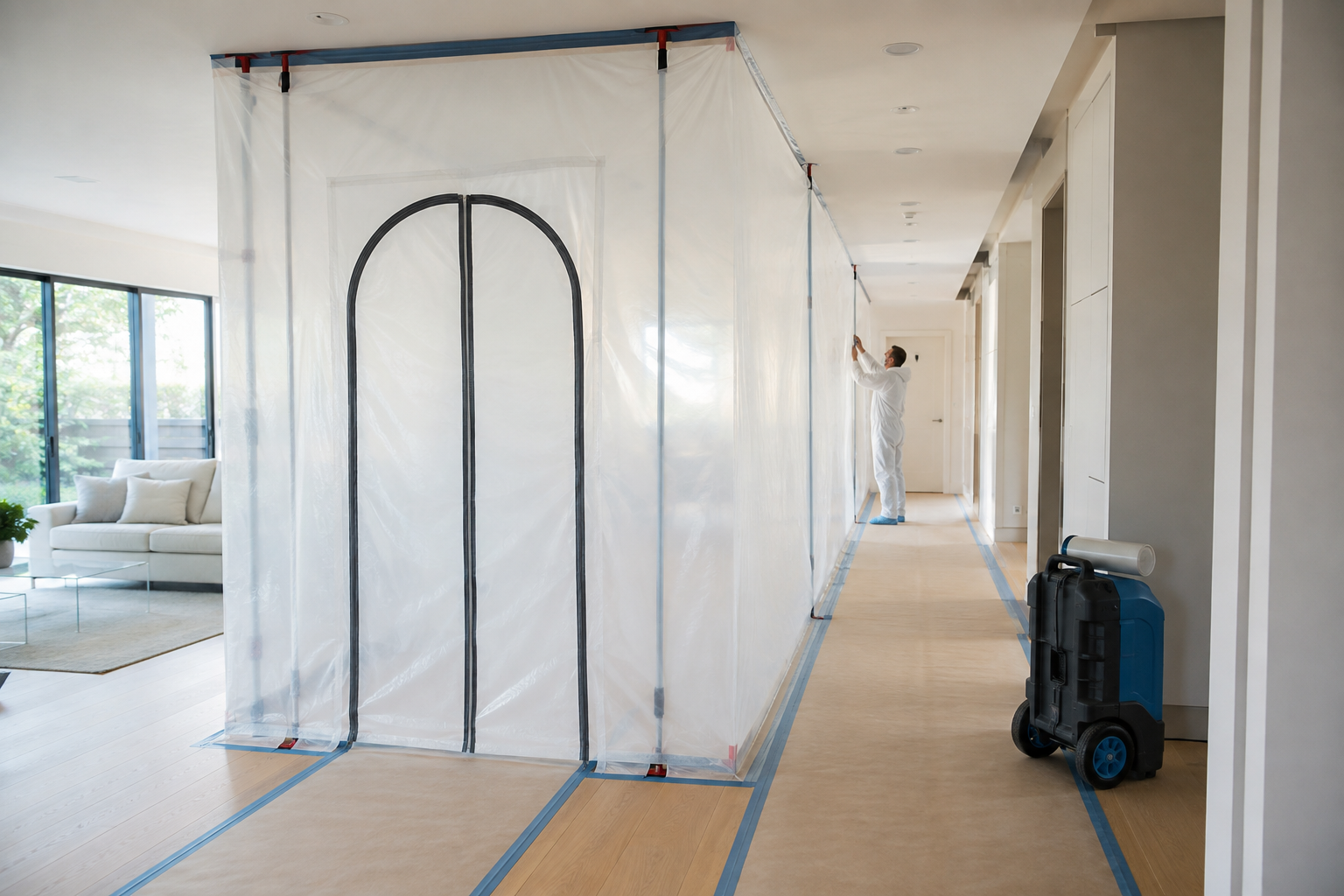
The regulated area, access controls, critical barriers, and air controls are established.
Qualified workers use controlled methods to remove, package, and label affected materials.
The work area is HEPA-cleaned and prepared for the required post-abatement review.
Required records and clearance information are organized for a clean project handoff.
Asbestos abatement is more than removing material. It requires a controlled environment, qualified workers, appropriate protective equipment, careful handling, and procedures that help keep fibers from spreading beyond the regulated area.
Critical barriers and controlled entry help separate the work area from occupied or unaffected spaces.
Negative-air equipment, HEPA filtration, and wet methods are used as appropriate for the project.
Qualified workers use project-appropriate respiratory protection, protective clothing, and decontamination procedures.
Affected material is kept controlled, packaged, labeled, transported, and disposed of according to applicable requirements.
Owners, contractors, restoration teams, property managers, and insurance-related partners need to know what was completed and what may happen next. We keep the project organized from the approved scope through the handoff.
We coordinate scheduling and communicate completion information so restoration, renovation, or demolition teams can plan their next step with a clear understanding of the completed scope.
Discuss Your ProjectTesting comes first. Safe Abate can inspect and sample suspect materials before an abatement scope is developed.
We mobilize for residential, commercial, restoration, multifamily, and larger projects throughout Washington.
Clear answers help property owners and project teams understand what to expect before regulated work begins.
That depends on the material, work location, containment design, and overall project scope. Access to the regulated asbestos work area is limited to authorized personnel. Occupants may also need to avoid additional portions of the property when those areas cannot be safely separated from the work. We explain all access restrictions before abatement begins.
Timing depends on the amount and type of material, containment requirements, project location, required notifications, and any clearance requirements. We provide a project-specific schedule after reviewing the scope.
Asbestos-containing waste is kept controlled, placed in leak-tight packaging or containers, labeled as required, and transported to a facility authorized to accept it. Disposal and transportation requirements can vary by material and jurisdiction, and applicable records are maintained with the project documentation.
Not every asbestos project requires final air-clearance sampling. Requirements depend on the building type, material, project scope, applicable regulations, and contract specifications. The completed work area should receive the required final visual evaluation, and air-clearance testing is coordinated when required by regulation or the approved project plan.
Encapsulation may be an appropriate asbestos-control method when the material is in suitable condition and will not be disturbed by the planned work. It requires a product and application method intended for asbestos-containing material—ordinary paint is not automatically an acceptable encapsulant. Material condition, future disturbance, and project requirements must be evaluated first.
Yes. Safe Abate provides asbestos testing and certified asbestos abatement. Testing identifies the material and helps define the removal scope. When independent clearance or additional third-party documentation is required, that step is coordinated according to the applicable project requirements.
Yes. We can prioritize urgent projects and coordinate with restoration companies, property owners, and insurance-related teams. Required asbestos procedures still remain part of the work.
Yes. Safe Abate is based in Yakima and serves projects throughout Washington State. Scheduling and mobilization depend on project size, location, and urgency.
Tell us about the property and what you need. Our team will help you identify the right next step.